
Real Ideas. Real Projects. Real Responsibility.
The danceScape Creative Leadership Lab is an evolving initiative emerging from more than 25 years of building danceScape, mentoring others, developing teachers and facilitators, creating community projects, experimenting with new technologies—and continually adapting our own business along the way.
The name is new. The ideas behind it have been developing for years.
What is changing now is that we are bringing those experiences together into a more intentional approach to mentorship, leadership and learning through real-world projects.
The timing matters.
Every generation inherits a world it did not design. We inherit the breakthroughs, knowledge, technologies and opportunities created by those who came before us. We also inherit unresolved problems, unintended consequences and assumptions that may no longer fit the world ahead.
Today, as danceScape itself navigates another period of transformation in the age of Artificial Intelligence, we see an opportunity not simply to pass along what we have learned, but to learn alongside the next generation.
What should we preserve? What should we question? What should we change? What should we create next?
Our premise is simple:
We don’t just develop ideas. We develop people through ideas.
Before the Pitch: “Pre-Dragon’s Den”
Long before there was a Creative Leadership Lab, we were living many of the questions behind it.
During the dot-com era, danceScape received startup seed funding from Seattle-based Timberline Venture Partners. We experienced what it was like to have an idea attract outside investment while technology, markets and business models were changing rapidly.
Later, we travelled to California to pitch investor Tim Draper in an experience documented by CBC’s Fortune Hunters. We eventually appeared on CBC’s Dragons’ Den. This time, we didn’t receive funding.
Both experiences taught us something.
Getting funded does not prove that an idea will succeed. Not getting funded does not prove that it will fail.
What matters is what happens next.
Can you articulate the idea? Who receives value from it? Will anyone use it, support it or pay for it? What assumptions are you making? Can you test them? What happens when the evidence challenges what you originally believed?
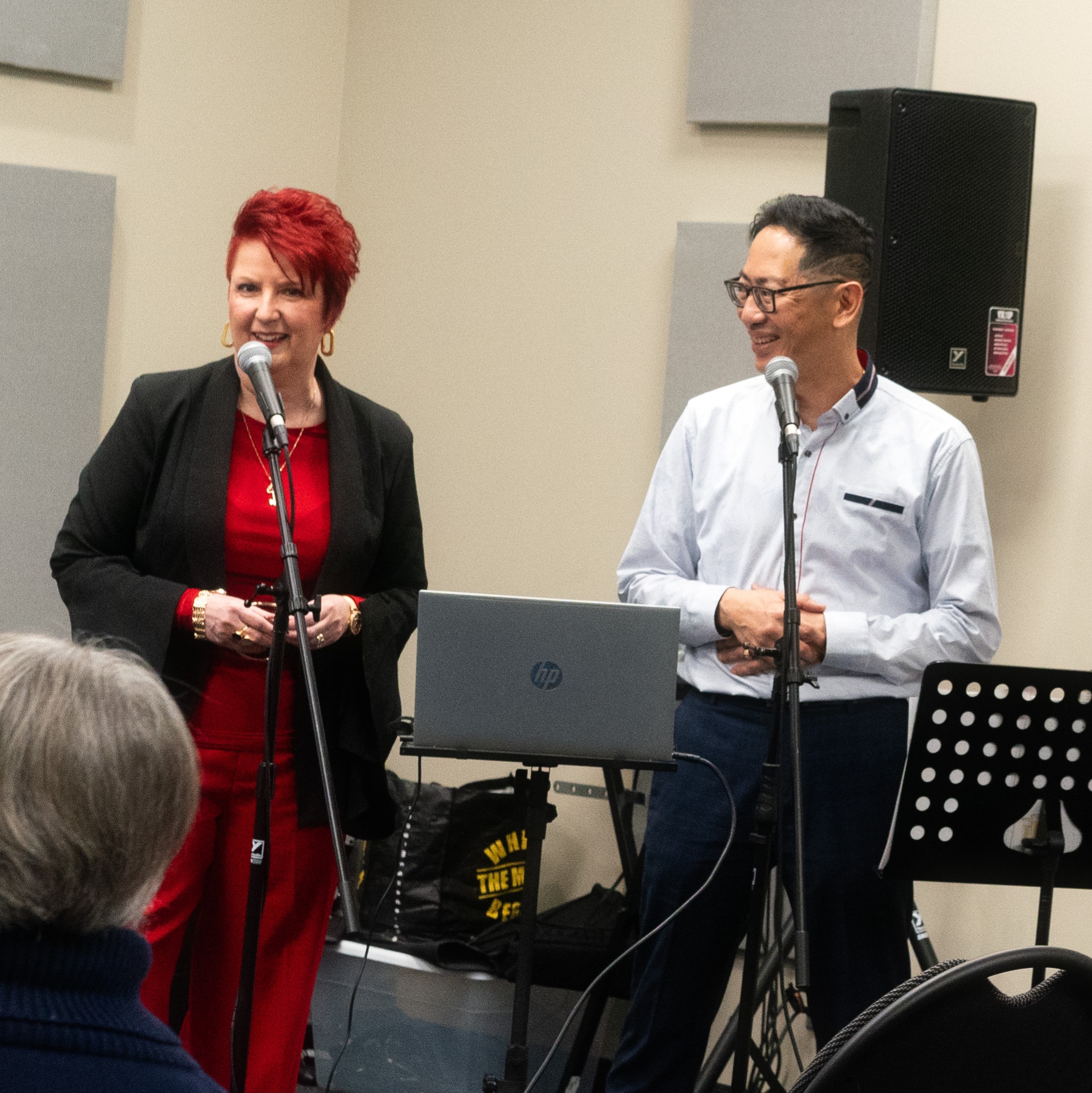
Looking back, we also recognize something we were searching for ourselves. It wasn’t simply an investor, a connection or someone to give us the answers.
We needed mentors who could help us ask better questions before the stakes became larger.
Have you considered this? What assumption are you making? How could you test it? Go try it. Come back and tell me what happened. What did you learn? What will you do differently?
That insight has become an important part of the Creative Leadership Lab.
We sometimes describe it as “Pre-Dragon’s Den.”
Not because the objective is to appear on television or raise venture capital. It describes the work that comes before the pitch: developing the idea while also developing the person behind it.
The Idea Becomes the Laboratory
Traditional education often asks students to study someone else’s case.
The Creative Leadership Lab gives people an opportunity to become part of a case of their own.
It might begin with a business idea, community initiative, creative project, technology, event, teaching concept or problem someone wants to solve.
The process is straightforward:
IDEA → ARTICULATE → QUESTION → TEST → EVIDENCE → FEEDBACK → PIVOT → ADAPT → BUILD
The original idea may work. It may change. It may become something completely different. Or the evidence may tell us to stop.
All can be valuable outcomes.
The idea becomes the laboratory. The person is what we’re really developing.
Proof of Concept Means Facing Reality
Ideas are easy to love when they exist only in our heads. Reality asks harder questions.
Who needs this? What problem does it actually solve? Can you communicate the value? Will someone give their time, attention, participation, referral or money?
Revenue can be evidence of value, but it isn’t the only evidence.
A project might become a business, nonprofit, social enterprise, sponsored community initiative or something we haven’t anticipated. The objective isn’t to force every idea into a company. It is to learn how to test assumptions against reality.
Sometimes discovering that the original idea was wrong is the most useful result.
Lead the experiment. Follow what the experiment teaches you.
Our Founding Initiatives: Real People, Real Projects
The Creative Leadership Lab is beginning with three very different initiatives, each exploring a different pathway for developing ideas, capabilities and leadership through real-world experience.
Rather than beginning with a fixed curriculum or predetermined outcome, we are starting with people, their interests and the possibilities that emerge through collaboration.
Gina — Youth Entrepreneurship and Community Leadership
Gina is an honours student in her final year of high school with a background and interest in dance, marketing, audio/podcast journalism, entrepreneurship and a desire to make a difference. Through our mentoring conversations, we’re exploring how her ideas and entrepreneurial aspirations can develop into meaningful opportunities, including possibilities connected to Rise Through Rhythm, danceScape’s initiative to make dance, fitness and wellness more accessible to people facing significant life circumstances.
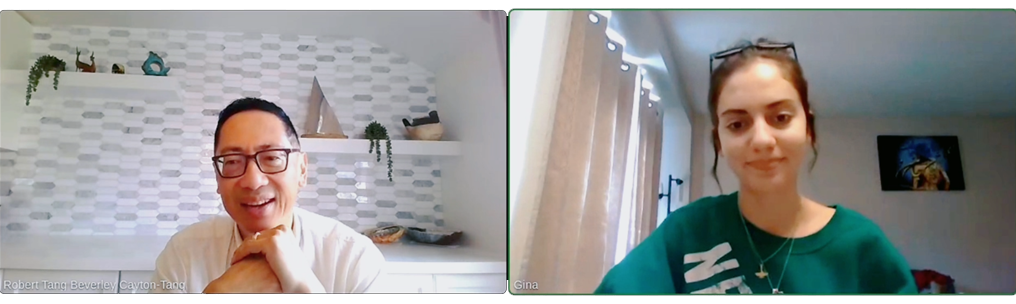
Our discussions are not simply about developing a particular project. They are also about asking questions, exploring possibilities, learning to evaluate opportunities and building the confidence to take initiative.
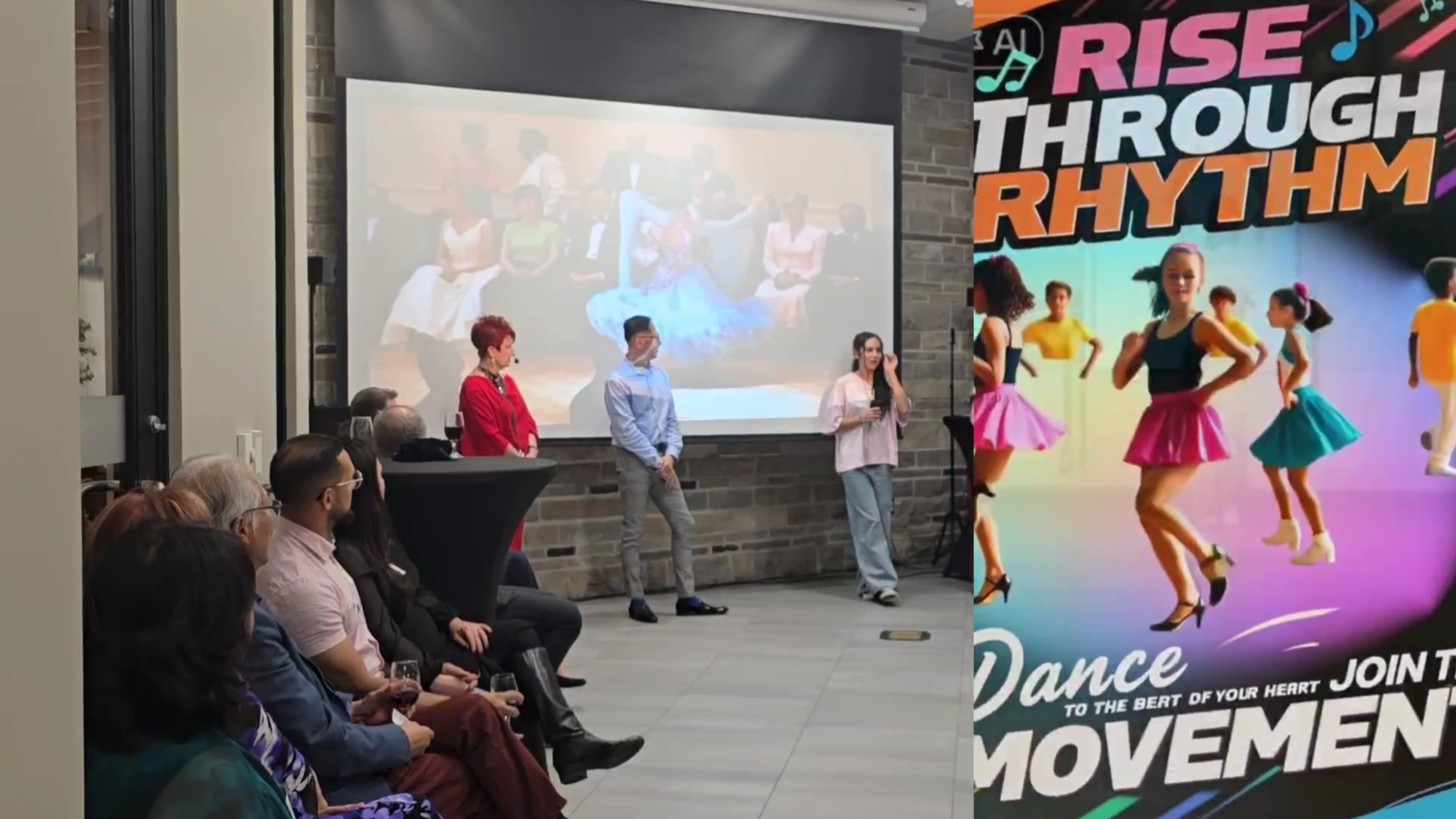
How does a young person move from having an idea to recognizing that they have the ability to create something meaningful?
And how can experienced mentors help open doors without determining the path someone must follow?
Claudia & Claudio — From Learning to Facilitating
Claudia and Claudio share a passion for dancing, particularly American Style Ballroom. Their love of dancing goes back to their dating years, and after time away from the dance floor, they rediscovered that shared passion. Today, they’re exploring a new possibility: learning to teach others and perhaps one day operating their own dance studio.
They recently completed danceScape’s Ballroom Facilitator Foundations training, helping us explore another dimension of creative leadership.
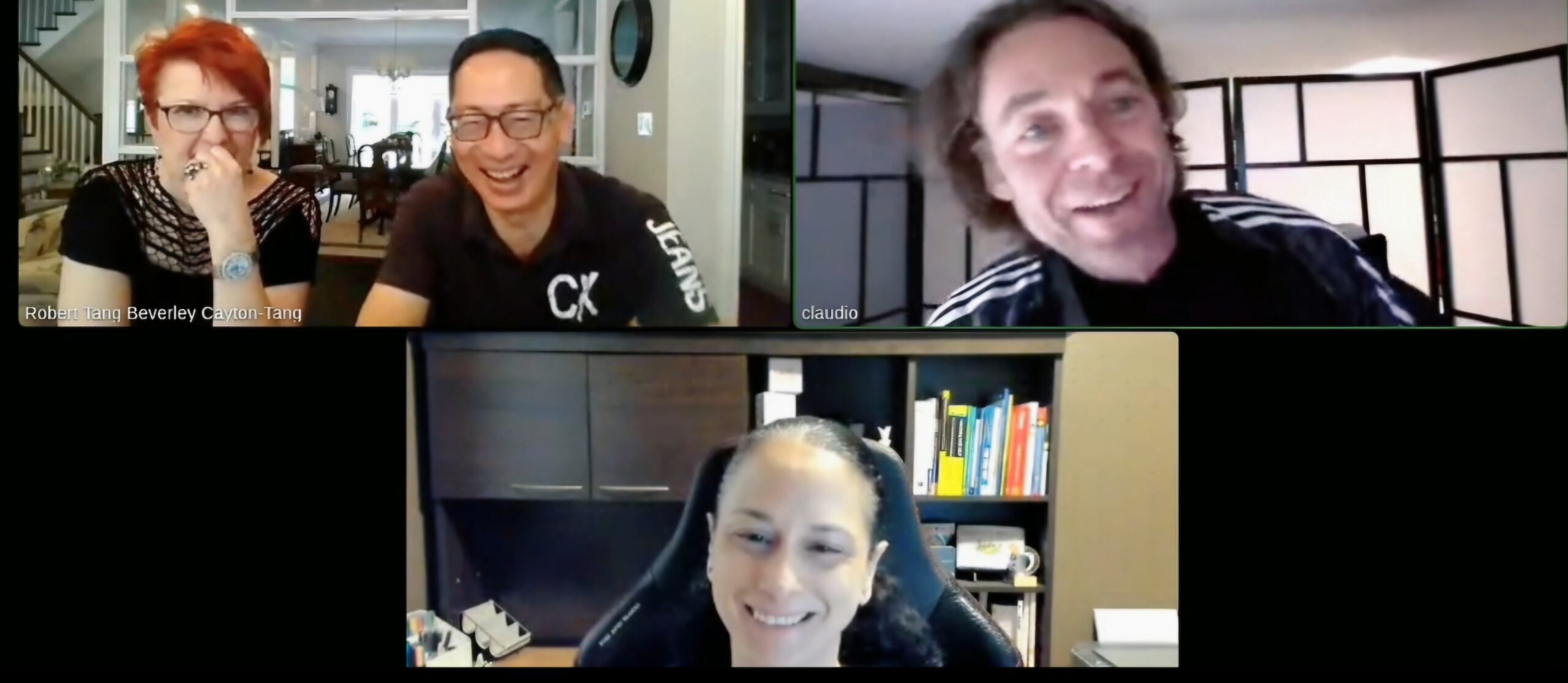
Learning to dance is one thing. Learning how to help someone else dance is something quite different.
It requires more than technical knowledge. It involves communication, observation, empathy, adaptability and the confidence to guide others through unfamiliar experiences.
Through the Creative Leadership Lab, we’re exploring how their passion for dancing might develop into teaching opportunities, while also helping them understand the practical realities of eventually running their own studio.
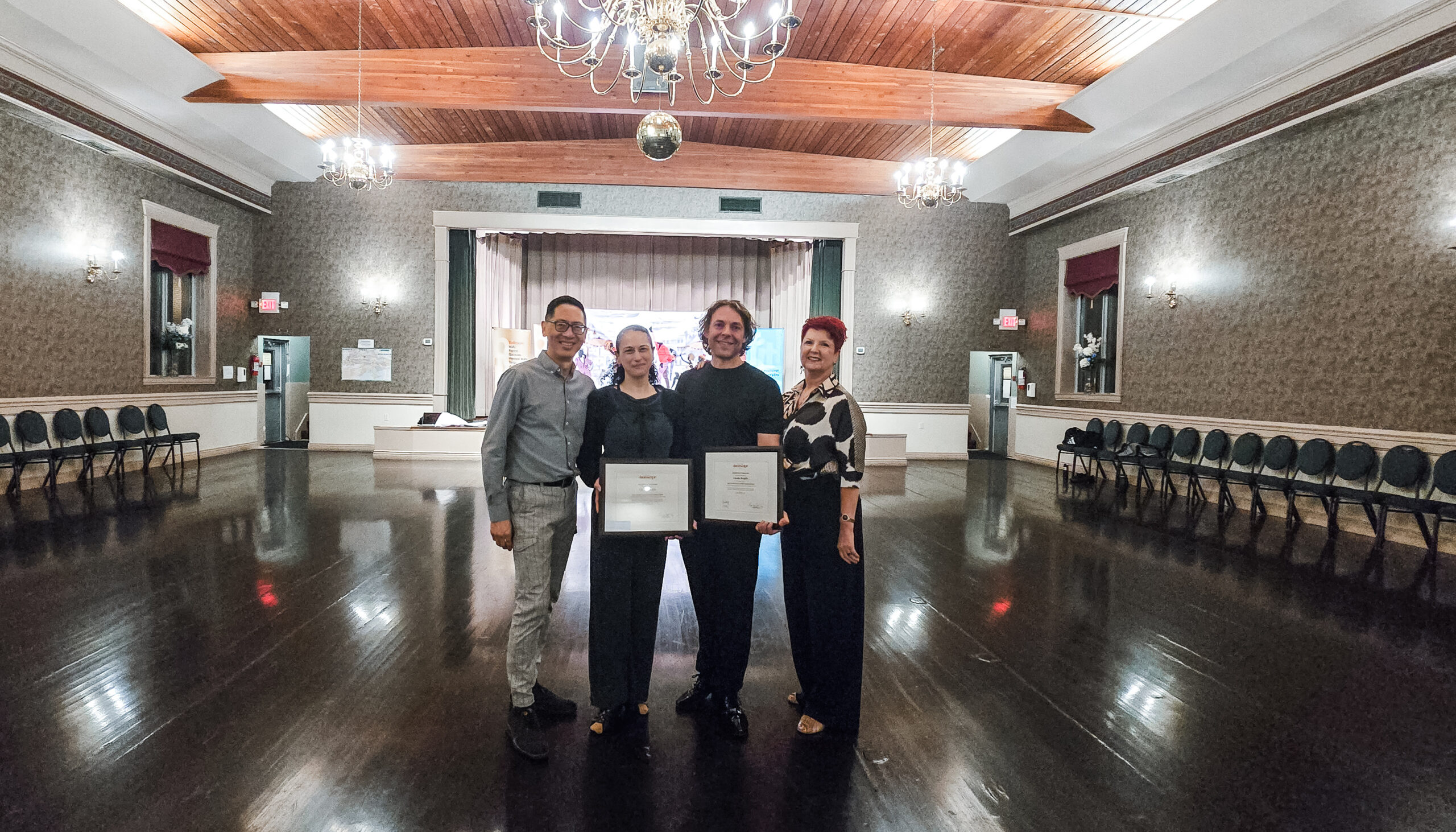
As Claudia and Claudio develop their capabilities, we’re also learning how to refine our approach to facilitator training and create pathways for others who may wish to teach, facilitate or mentor.
Their experience reflects a question that extends well beyond dancing:
How do we turn something we love doing into something we can share with others—and perhaps build a new future around?
Alex & Akshath — Mindful Moments
Alex and Akshath are the creators of Mindful Moments, an emerging digital wellness initiative exploring how technology can make mindfulness and mental wellness resources more accessible.
Both are university graduates pursuing different professional paths. Alex is currently in his second year of medical school, while Akshath works as a financial analyst. Together, they bring perspectives from healthcare, finance and technology to a shared interest in mental wellness.
They have taken an idea and begun turning it into something real. But where that idea might lead—and whether it becomes a business, social enterprise, community initiative or something else—is still being explored.
Through the Creative Leadership Lab, we’re examining questions about their concept, user experience, differentiation, marketing, sustainability and opportunities for growth.
Who are they trying to help? What problem are they solving? How do they know whether people are finding value? What would it take to sustain and develop the initiative over time?
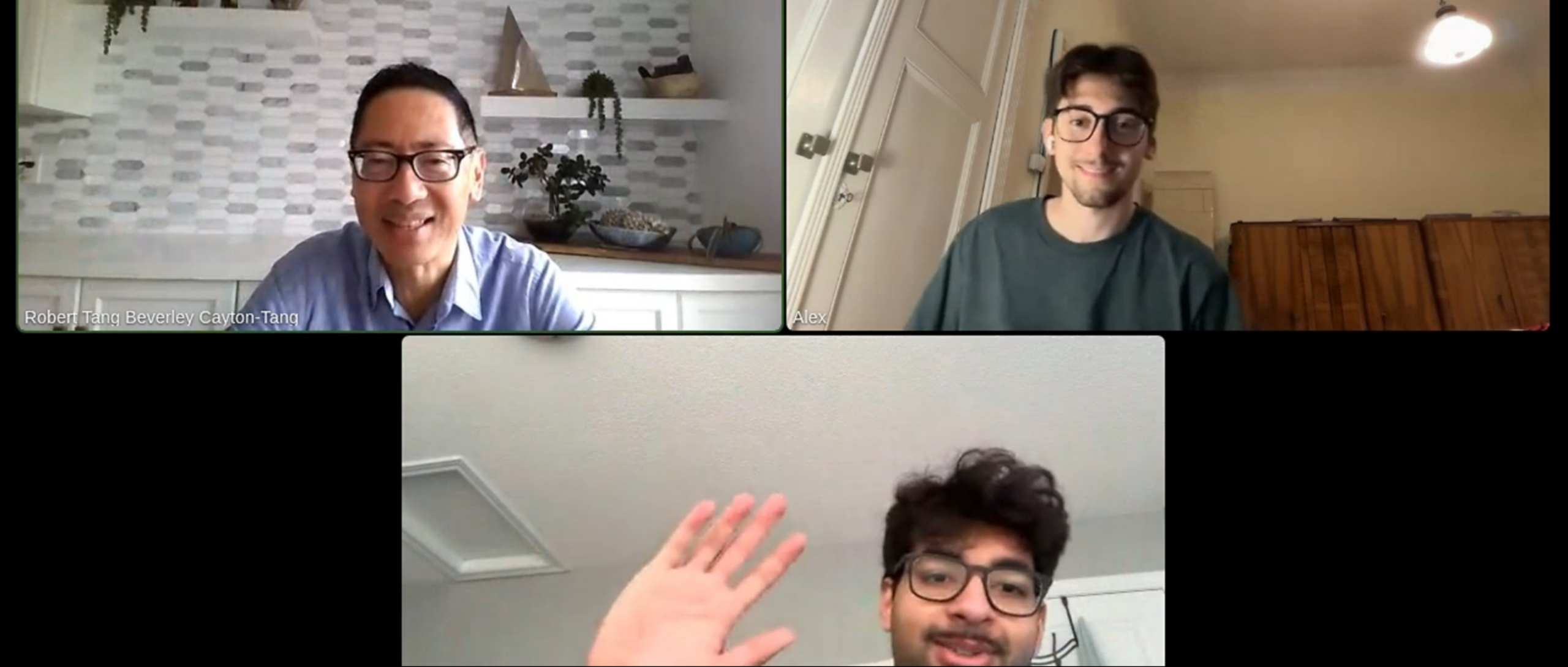
We’re also exploring opportunities to connect them with people from different professional backgrounds from within and outside the danceScape community who may offer useful perspectives and feedback.
What makes this collaboration particularly interesting is the intergenerational exchange.
They bring their own ideas, technological perspectives and curiosity. We bring our experience in business development, marketing, communications and navigating the uncertainties of turning ideas into reality.
Neither perspective is complete on its own.
Mindful Moments remains their independent initiative. Our role is not to take ownership of their idea or determine what it should become, but to help them explore possibilities, test assumptions and discover what they want to pursue.
The objective isn’t necessarily to turn them into entrepreneurs. It’s to help them develop the judgment, capabilities and confidence to decide what comes next.
And we expect to learn from them along the way.
Different Projects. Shared Learning.
Youth entrepreneurship and community impact. Facilitator development. Technology-enabled wellness.
Three very different initiatives, yet each offers opportunities to explore the same underlying questions.
What does someone bring to the table? What are they hoping to develop? What can we discover together? What happens when an idea encounters reality?
These are early initiatives, not finished success stories. Their outcomes are still unfolding.
And that is precisely why they belong in a living laboratory.
We don’t just develop ideas. We develop people through ideas.
Developing the Person
A real project reveals things that a classroom exercise may not.
Can people depend on you? Can you communicate when circumstances change? Can you work with others? Can you receive criticism? Can you lead when leadership is required, follow when someone else knows more, and change direction when the evidence says you should?
These aren’t simply entrepreneurial skills. They matter whether someone becomes an entrepreneur, employee, educator, facilitator, creator, professional or community leader.
Our experience in partner dancing has influenced how we think about this.
Leadership does not mean one person dominates while the other passively follows. Both people require awareness, timing, communication, trust and responsiveness.
Sometimes you lead. Sometimes you follow. Sometimes your most valuable contribution is helping someone else lead.
We think of this as the Rhythm of Leadership.
From Creator to Facilitator
There is another form of creative leadership danceScape knows well.
Knowing something is not the same as knowing how to help someone else learn it.
That distinction is shaping danceScape’s re-imagined Teacher and Facilitator Development.
Beginning with areas such as Ballroom, Salsa/Latin and dance-based fitness, aspiring and emerging facilitators can develop not only technical knowledge but communication, empathy, observation, adaptability and the ability to create meaningful experiences for other people.
The progression becomes:
LEARN → COMMUNICATE → CREATE → LEAD → FACILITATE → MENTOR
Someone may begin by asking:
Can I do this?
Eventually the more interesting question becomes:
Can I help someone else do this?
We’ll explore that initiative further in an upcoming article.
From Being Mentored to Mentoring
Development shouldn’t end when someone becomes capable. The next question is whether they can help someone else become capable.
That creates another progression:
LEARN → COMMUNICATE → CREATE → LEAD → FACILITATE → MENTOR
Someone who begins by being mentored may eventually help develop someone coming behind them.
But mentorship doesn’t need to flow in only one direction.
Older generations bring experience, relationships, successes, failures and perspective. Younger generations bring different questions, technologies, cultural experiences and possibilities we may not see.
Neither has all the answers.
That is why we see the Creative Leadership Lab as intergenerational rather than simply one generation teaching another.
Another Period of Disruption
We built danceScape during the emergence of the Internet and the dot-com era. Today another generation is entering adulthood during the rise of Artificial Intelligence.
The technologies are different. The consequences will be different. But one challenge feels familiar:
How do we distinguish genuine possibility from hype when both are happening at the same time?
AI can research, write, edit, analyze, create images and video, develop prototypes and accelerate work that once required considerably more time.
But acceleration is not judgment.
AI can generate ten possibilities in seconds. A human still has to decide which one matters, whether it is accurate, what context is missing, who benefits and what should—or shouldn’t—be done with it.
This places greater importance on human capabilities such as curiosity, articulation, communication, empathy, judgment, initiative, adaptability, collaboration and responsibility.
AI can assist with all of them.
It cannot relieve us of responsibility for them.
danceScape Is Part of the Experiment
We aren’t approaching this transformation from the sidelines. danceScape is itself a 25+ year company navigating the age of AI.

We are exploring how emerging technologies may change marketing, communications, video production, customer experience, administration, teaching, facilitator development and what a small founder-led organization can accomplish.
Some things can now be done in minutes that once took hours or days.
But what should we automate? What should remain human? Where does technology genuinely create value? Where does it simply create more noise? How do we use these tools without losing relationships, creativity, judgment and trust?
We don’t have all the answers.
That’s what makes danceScape itself part of the Lab.
Participants aren’t entering a classroom where two experienced entrepreneurs explain how business used to work. They can work alongside us as we explore a real question:
How does an established company adapt to another period of technological disruption without losing what made it valuable in the first place?
Sometimes we mentor them. Sometimes they challenge us. Sometimes we discover the answer together.
The Creative Leadership Lab isn’t happening beside danceScape’s transformation. It is happening inside it.
Why danceScape?
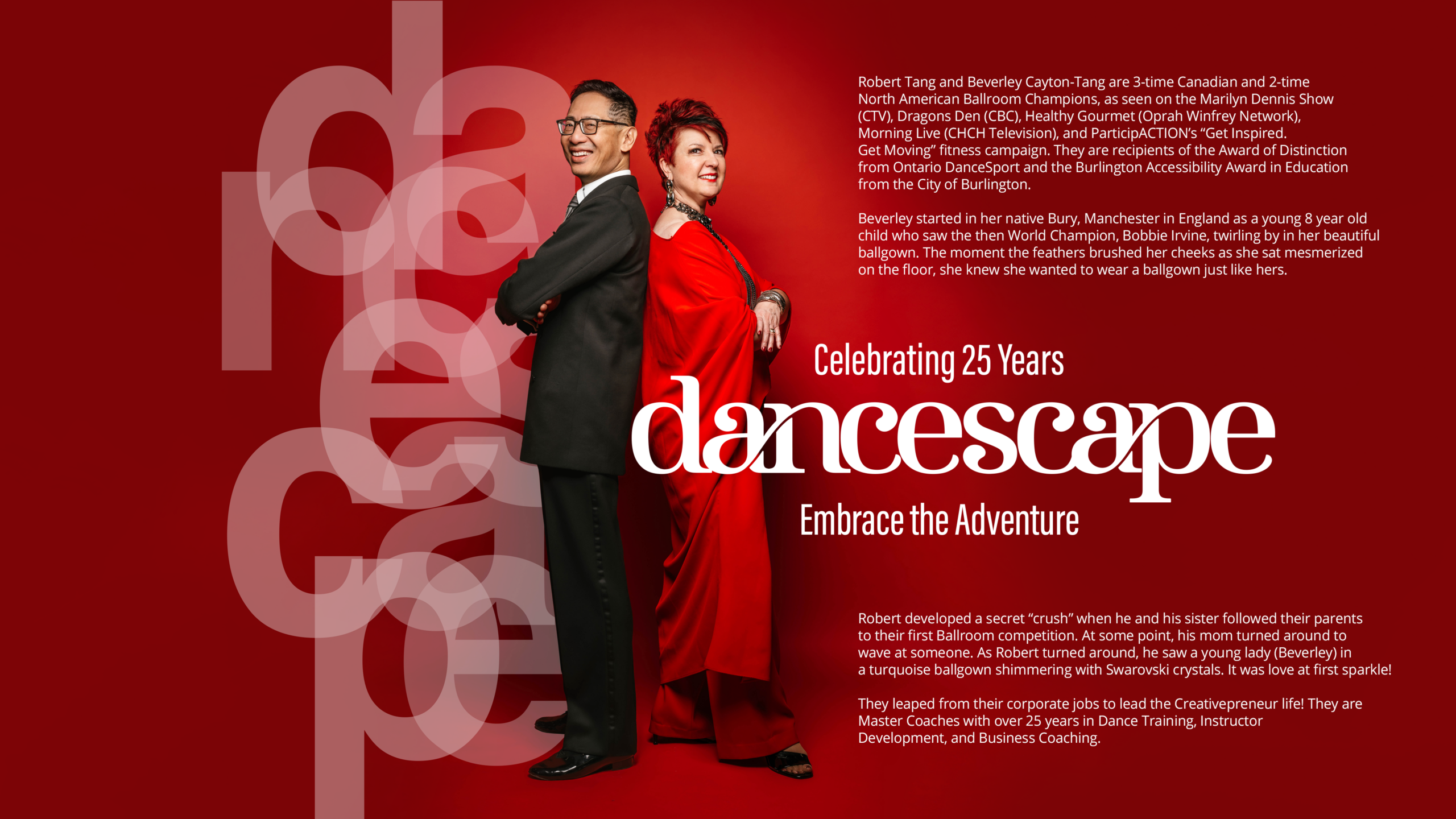
For more than 25 years, Robert Tang and Beverley Cayton-Tang have been teaching people something deceptively complex: how to move together.
Robert’s early career crossed research, technology, marketing and communications, including working with a Canadian software startup specializing in computerized maintenance management systems that was later acquired by a larger American-based enterprise software solutions company.
Beverley worked in technology and information systems training before danceScape.
Together, they became three-time Canadian and two-time North American Ballroom Champions and represented Canada at five World Championships.
But dance has taught them something beyond steps.
When they teach someone to dance, they don’t simply give them information. They observe, break complexity into understandable pieces, demonstrate, let them try, give feedback and adapt.
Eventually, they stop needing them.
Sometimes they become capable of helping someone else.
The same pattern appears in entrepreneurship, leadership, teaching and mentoring.
For more than two decades, danceScape has been helping people transform knowledge into something they can actually do.
The Creative Leadership Lab extends that idea beyond the dance floor.
Creating Value — and Giving It Forward
We believe people should understand how value is created.
That includes customers, revenue, costs, investment, ownership, profit, wealth and sustainability. Someone developing an idea should understand not only whether people like it, but whether enough value exists for people or organizations to support it.
But there is another question:
What is the value for?
Someone may build a successful company. Someone else may become an exceptional employee, teacher, artist, facilitator or community leader.
Success does not have one form.
Our own opportunities did not come from us alone. Someone taught us. Someone introduced us. Someone trusted us. Someone invested time, money or reputation in us. Someone opened a door.
Eventually, we have an opportunity to do the same for someone coming behind us.
Someone invested in me → I developed capability → I created value → I helped create opportunity for someone else.
That is how opportunity compounds across generations.
A Living Lab
The Creative Leadership Lab itself is an experiment.
The name and structure are new. The experiences behind it have been developing for more than 25 years.
Now we are bringing those experiences together, testing the approach with real people and real projects, listening to what happens and allowing the Lab itself to evolve.
Some things will work. Others won’t.
That’s the point.
After more than 25 years of building, teaching, competing, creating and adapting, one lesson continues to hold: you don’t need to have all the answers before you begin.
You need the curiosity to ask better questions, the courage to test your ideas, the humility to follow the evidence and the responsibility to do something meaningful with what you learn.
That was something we needed when we were beginning our own journey.
Today, we have an opportunity to help create it for those coming behind us—while remaining open to what they may teach us in return.
Real Ideas. Real Projects. Real Responsibility.
danceScape Creative Leadership Lab